
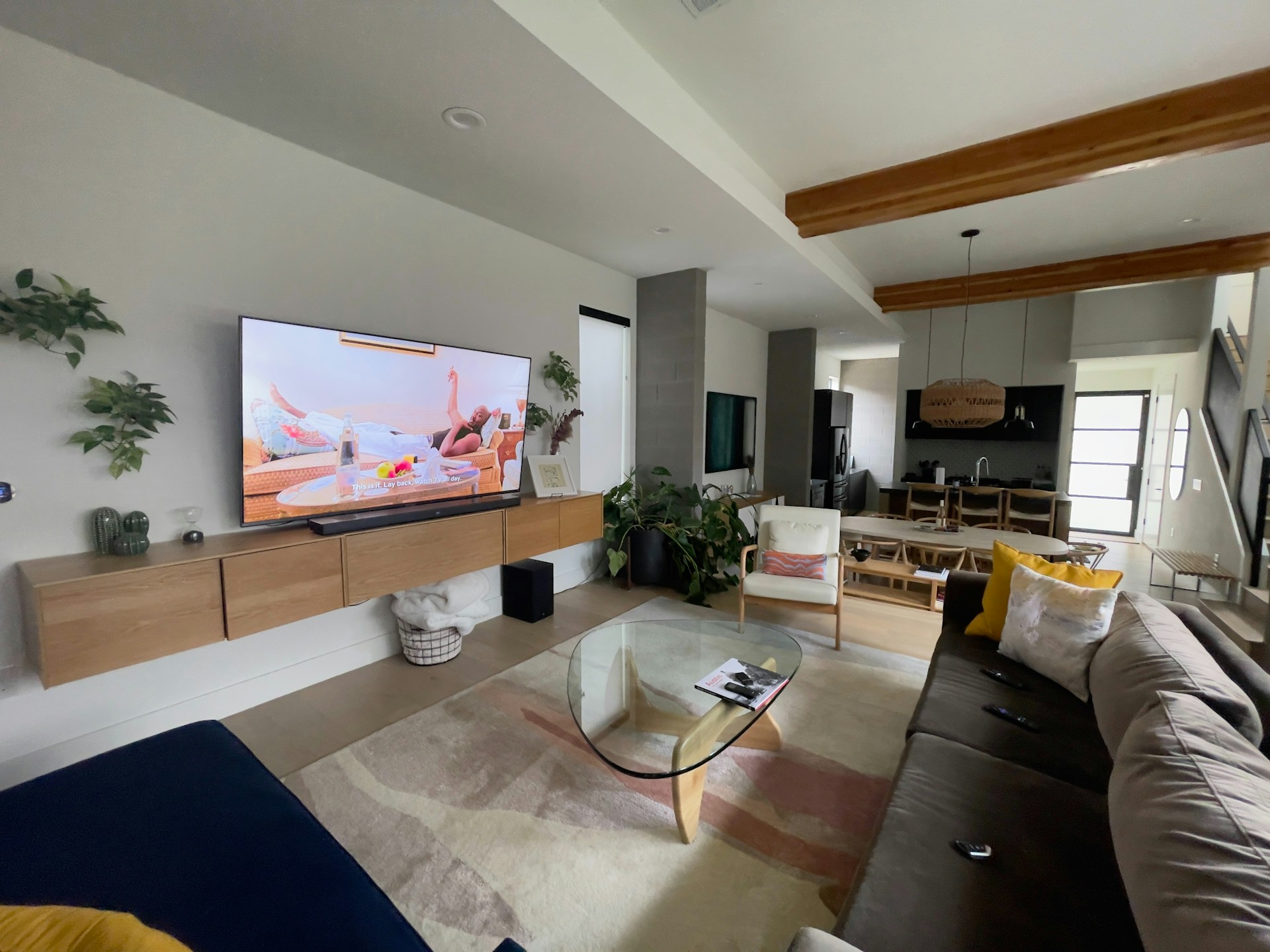
Technology evolves at a staggering pace. What seemed like science fiction five years ago is now standard in many high-end homes and businesses.
As 2026 approaches, the landscape of AV technology is shifting toward deeper integration, higher fidelity, and seamless aesthetics. Homeowners and business leaders are no longer satisfied with disparate devices; they demand cohesive ecosystems that anticipate needs and elevate environments.
The next few years will define a new era where screens disappear when not in use, lighting creates wellness, and audio becomes truly immersive without cluttering a room. For those looking to invest in their property, understanding these audiovisual trends is essential to ensuring longevity and value.
This article explores the innovations that will shape residential and commercial spaces in the near future, offering insights into how custom installations from experts like centralcoastav.com can bring these concepts to life.
1. The Domination of Micro-LED and Modular Displays
The era of the standard rectangular television is evolving. By 2026, Micro-LED technology is expected to move from a niche luxury to a dominant standard in high-end viewing.
Unlike traditional LED or OLED screens, Micro-LED offers superior brightness, infinite contrast, and significantly longer lifespans without the risk of burn-in.
Beyond the Bezel
The most exciting application of this tech is modularity. Custom installations allow for video walls that can be built to any aspect ratio or size. This is particularly relevant for:
- Home Theaters: Creating wall-to-wall cinema screens that dwarf traditional projection setups.
- Digital Art: Displays that function as architectural elements, showing 8K art pieces when not used for movies.
- Commercial Signage: Seamless video walls for lobbies or conference rooms that offer crystal-clear visibility even in direct sunlight.
Brands like Samsung and Planar are leading this charge, pushing the boundaries of what a “screen” can be. The result is a visual experience that feels less like watching TV and more like looking through a window.
2. Artificial Intelligence in Home Automation
Smart homes have existed for over a decade, but the trend for 2026 is moving from “connected” to “intelligent.” Early iterations of home automation required users to pull out a phone and press a button or shout a command at a speaker. The future lies in predictive automation powered by AI.
The Anticipatory Home
Advanced systems, such as those from Savant, are becoming capable of learning habits and preferences.
- Climate Control: The system learns that a family prefers the living room to be cooler in the evening and adjusts the HVAC automatically before they arrive.
- Predictive Lighting: Sensors track movement and ambient light levels, adjusting shades and fixtures without the user touching a switch.
- Energy Management: AI algorithms analyze energy usage patterns to optimize battery backups and solar consumption, reducing the carbon footprint automatically.
This shift reduces the cognitive load on the user. The goal of sophisticated AV technology is to be helpful without being intrusive.
3. Human-Centric Lighting and Wellness
Lighting is no longer just about visibility; it is about biology. One of the most significant audiovisual trends gaining momentum is the integration of Human-Centric Lighting (HCL). This technology mimics the natural progression of sunlight throughout the day to support the body’s circadian rhythm.
Bringing the Outdoors In
Using advanced tunable LEDs from innovators like Ketra, custom installations can replicate the color temperature and intensity of the sun.
- Morning: Bright, cool blue light helps suppress melatonin and increases alertness.
- Afternoon: The light softens to a neutral white, maintaining focus without strain.
- Evening: Warm, amber tones simulate sunset, encouraging relaxation and preparing the body for sleep.
For luxury residences in areas like Montecito and Santa Barbara, this technology transforms the atmosphere of a home. It promotes better sleep, improved mood, and higher energy levels, proving that AV infrastructure can directly contribute to personal health.
4. Invisible Tech and Aesthetic Integration
Interior designers and AV integrators have historically been at odds—one wants clean lines, and the other wants big speakers and racks of equipment. By 2026, the conflict will be resolved through “invisible” technology. The demand for custom installations that hide hardware is at an all-time high.
Heard But Not Seen
Manufacturers are prioritizing form factors that blend seamlessly into the architecture.
- Invisible Speakers: Brands like Sonance offer audio solutions that are installed behind drywall and painted over, delivering high-fidelity sound with zero visual footprint.
- The Frame TV: Televisions that display artwork and feature matte finishes to look exactly like a canvas when turned off.
- Hidden Mechanisms: Motorized lifts that conceal projectors and screens in the ceiling, deploying them only when it is movie time.
This trend allows technology to serve the design rather than dominate it. It ensures that a room retains its aesthetic integrity while still offering top-tier entertainment capabilities.
5. Next-Generation Outdoor Entertainment
The backyard has become an extension of the living room, and AV technology is adapting to withstand the elements while delivering indoor-quality performance. The days of hauling a portable speaker outside are fading. 2026 will see robust, permanent outdoor entertainment landscapes.
Weatherproof Immersion
Modern outdoor setups are becoming sophisticated systems that rival indoor theaters.
- Directional Audio: Landscape satellite speakers and buried subwoofers direct sound toward the listening area, preventing noise pollution for neighbors while enveloping guests in music.
- High-Bright Screens: Outdoor TVs are being engineered with anti-glare technology and brightness levels that compete with direct sunlight.
- Stronger Networks: Expanded mesh Wi-Fi networks ensure that streaming 4K movies by the pool is as seamless as it is in the den.
For residents in coastal climates, professional installation is critical to ensure cabling and hardware can withstand salt air and moisture.
6. The Hybrid Commercial Workspace
The commercial sector is undergoing a revolution as hybrid work becomes permanent. Offices are redesigning conference rooms to accommodate a mix of in-person and remote participants. This requires AV technology that democratizes the meeting experience.
Equity in Collaboration
The “bowling alley” camera angle at the end of a conference table is obsolete. Future-forward trends include:
- Intelligent Framing: Cameras that use AI to zoom in on the active speaker, giving remote participants a face-to-face feel.
- Spatial Audio: Microphone arrays that filter out background noise (like typing or rustling papers) and clarify speech.
- Interactive Whiteboards: Digital displays that allow remote and in-person teams to draw and ideate on the same canvas in real-time.
Businesses utilizing centralcoastav.com for these commercial upgrades find that streamlined technology reduces technical difficulties, making meetings more efficient and professional.
Preparing for the Next Wave of Innovation
The trajectory of AV technology is clear: it is moving toward systems that are smarter, higher quality, and less intrusive. Whether it is a private residence or a corporate headquarters, staying current with these audiovisual trends ensures that a space remains functional and impressive for years to come.
However, implementing these advanced systems requires more than just purchasing hardware. It demands precise design, network planning, and expert execution.
Custom installations are the bridge between complex technology and effortless user experience. To explore how these innovations can transform a specific property, visiting centralcoastav.com is the first step toward a future-proof environment.


About the author


Ball Bearings: The Unsung Heroes of Industrial Efficiency
In the vast ecosystem of industrial machinery, massive engines and complex robotic arms often capture the most attention. Yet, the seamless operation of these systems relies heavily on a much smaller, often overlooked mechanical component: the ball bearing. These precision-engineered parts are the foundation of modern motion, allowing heavy shafts to rotate at high speeds with minimal friction. Without functional ball bearings, assembly lines would grind to a halt, turbines would seize, and the global supply chain would face immediate disruption. For professionals in the MRO-PT (Maintenance, Repair, and Operations - Power Transmission) sector, understanding the nuances of these components is not just a technical requirement but a business necessity. This article examines the critical function, maintenance, and future of ball bearings in an industrial context. The Anatomy of a Ball Bearing To understand the function of these components, one […]

Deep Dive: Essential Safety Protocols for Underwater Welding
Combining high-voltage electricity with a conductive water environment creates one of the most challenging professions on earth. Underwater welding is a vital component of marine construction, offshore oil repair, and pipeline maintenance. However, it requires a unique skillset that goes far beyond standard industrial welding capabilities. A hyperbaric welder must be an expert diver first and a skilled tradesperson second. The risks associated with this profession are significant. From the dangers of electric shock to the physiological toll of diving, the margin for error is razor-thin. Consequently, rigid adherence to safety protocols is the only way to ensure a successful project and the well-being of the crew. Whether you are an aspiring commercial diver or a project manager overseeing a marine operation, understanding these safety measures is non-negotiable. This guide outlines the critical techniques and precautions necessary to mitigate risk […]

How to Win the War for Top Talent in a Candidate-Driven Market
The dynamics of the employment market have shifted dramatically. Gone are the days when companies could simply post a vacancy and wait for a flood of qualified applications. The power balance has moved firmly into the hands of job seekers, creating a highly competitive environment where organizations must actively fight to capture the attention of high performers. This shift means that traditional methods of hiring are often insufficient. To stand out, companies need to treat recruitment less like a logistical necessity and more like a strategic marketing campaign. You aren't just selecting people; you are selling them on a vision, a culture, and a future. Finding the right people requires a multifaceted approach that goes beyond salary. It involves examining every touchpoint a potential employee has with your brand, from the first time they see a social media post to […]

The Taste of Vaping: Exploring Top Nicotine Flavors in 2024
The vaping industry has undergone a massive transformation in recent years, evolving from a niche alternative to smoking into a global phenomenon. A significant driver of this growth is the sheer variety of options available to consumers, particularly when it comes to taste. Unlike traditional tobacco products, which offer a limited sensory experience, vaping allows users to explore a vast landscape of culinary-inspired profiles. For many users, the appeal lies in the ability to customize their experience. Whether someone prefers the familiar bite of tobacco, the refreshing chill of menthol, or the sweetness of a dessert, there is a liquid designed to match that preference. This variety not only keeps the experience fresh but also plays a crucial role for those transitioning away from combustible cigarettes, offering a more palatable alternative. Understanding these preferences offers insight into the broader market. […]
Elevating Your Practice: Strategies for OBGYN Career Growth
Obstetrics and gynecology is a demanding, high-stakes field that requires immense dedication, emotional resilience, and technical skill. For many physicians, the early years of practice are consumed by establishing clinical competence and building a patient base. However, once you have settled into the rhythm of clinical practice, you might find yourself looking for what comes next. Advancing in the medical profession requires more than just clinical excellence; it demands strategic planning and a willingness to step outside your comfort zone. Whether you are looking to increase your income, reduce burnout, or influence healthcare policy, there are numerous paths available to take your career to the next level. Career advancement looks different for every physician. For some, it means narrowing their focus to a specific sub-specialty. For others, it involves stepping into leadership roles or shaping the next generation of doctors […]

Why Are My Lights Flickering? 6 Common LED Problems Solved
LED lighting has revolutionized how we illuminate our homes and businesses. These bulbs are energy-efficient, long-lasting, and generally low-maintenance. However, despite their advanced technology, they aren't immune to occasional hiccups. From annoying flickers to sudden burnouts, LED issues can be frustrating if you don't know the root cause. Understanding the mechanics behind these problems is the first step toward a solution. Often, the issue isn't with the bulb itself but with the fixture, the wiring, or an incompatibility with older dimmer switches. By diagnosing the problem correctly, you can save money on unnecessary replacements and ensure your lighting system operates safely. This guide explores the most frequent LED headaches homeowners encounter. It provides actionable troubleshooting steps to get your lights back on track and highlights when it might be time to call in the experts at 725Co. LED Repair Professionals. […]
Related
Why Are My Lights Flickering? 6 Common LED Problems Solved
LED lighting has revolutionized how we illuminate our homes and businesses. These bulbs are energy-efficient, long-lasting, and generally low-maintenance. However, despite their advanced technology, they aren't immune to occasional hiccups. From annoying flickers to sudden burnouts, LED issues can be frustrating if you don't know the root cause. Understanding the mechanics behind these problems is the first step toward a solution. Often, the issue isn't with the bulb itself but with the fixture, the wiring, or an incompatibility with older dimmer switches. By diagnosing the problem correctly, you can save money on unnecessary replacements and ensure your lighting system operates safely. This guide explores the most frequent LED headaches homeowners encounter. It provides actionable troubleshooting steps to get your lights back on track and highlights when it might be time to call in the experts at 725Co. LED Repair Professionals. […]